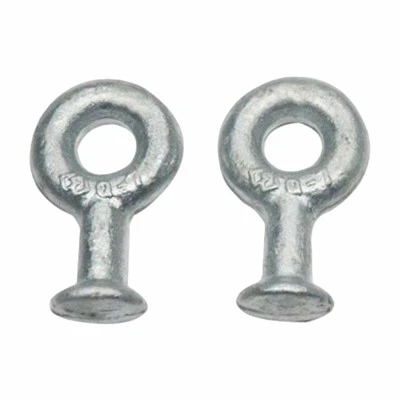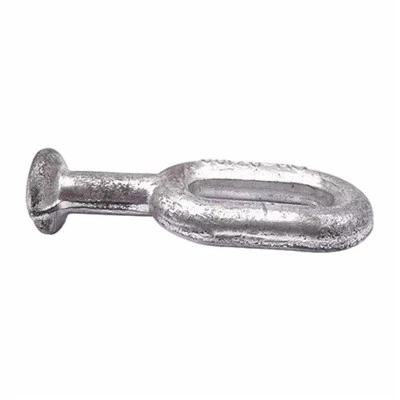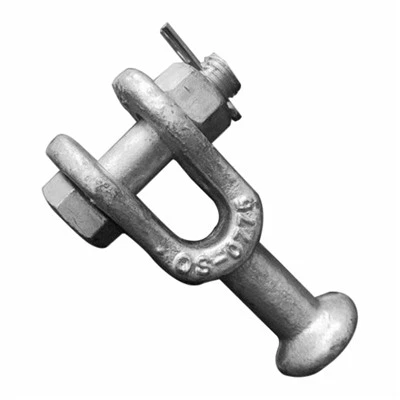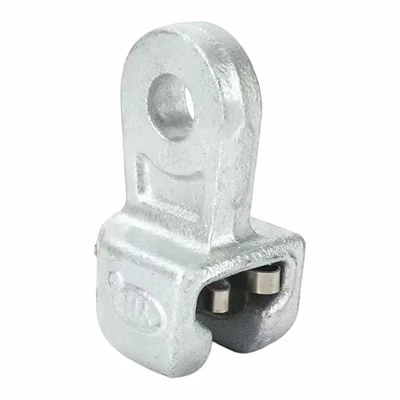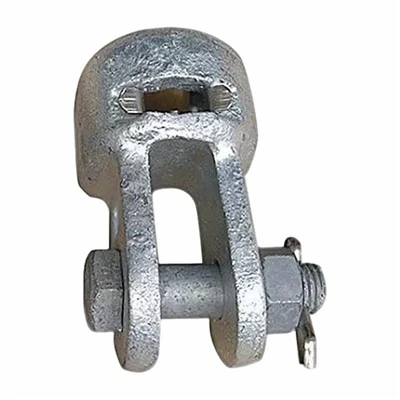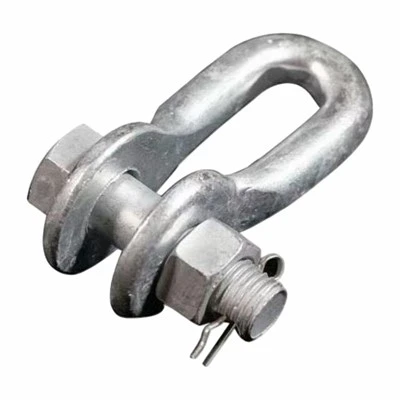
1. According to function and structure, power fittings can be divided into suspension clamps, tension clamps, UT clamps, connecting hardware, splicing hardware, protective hardware, equipment clamps, T-type clamps, busbar hardware, and guy wire hardware; according to application, they can be divided into line hardware and substation hardware.
2. According to product unit, power fittings are divided into malleable cast iron, forged, aluminum-copper-aluminum, and cast iron categories, a total of four units.
3. They can also be divided into national standard and non-national standard categories.
4. According to the main performance and application of fittings, they can be roughly divided into the following categories:
1) Suspension fittings, also known as support fittings or suspension clamps. These fittings are mainly used to suspend conductors on insulator strings (mostly used on straight-line towers) and to suspend jumpers on insulator strings.
2) Anchoring fittings, also known as fastening fittings or tension clamps. These fittings are mainly used to fasten the ends of conductors, fixing them to tension insulator strings, and are also used for fixing lightning protection wire ends and anchoring guy wires. Anchoring hardware bears the entire tension of conductors and lightning protection wires; some anchoring hardware even acts as conductors.
3) Connecting hardware, also known as hanging parts. This type of hardware is used for connecting insulators into strings and for connecting hardware to hardware. It bears mechanical loads.
4) Splicing hardware. This type of hardware is specifically used for splicing various bare conductors and lightning protection wires. The splice bears the same electrical load as the conductor, and most splicing hardware bears the entire tension of the conductor or lightning protection wire.
5) Protective hardware. This type of hardware is used to protect conductors, insulators, etc., such as equalizing rings for protecting insulators, counterweights to prevent pull-out of insulator strings, and vibration dampers and protective wires to prevent conductor vibration.
6) Contact hardware. This type of hardware is used for connecting rigid busbars, flexible busbars, and the outgoing terminals of electrical equipment, T-connections of conductors, and non-load-bearing parallel connections, etc. These connections are electrical contacts. Therefore, contact hardware is required to have high conductivity and contact stability.
7) Fixing hardware, also known as power plant hardware or high-current busbar hardware. These fittings are used for fixing and connecting various rigid or flexible busbars to post insulators in power distribution equipment. Most of these fittings do not function as conductors, but only serve to fix, support, and suspend the conductors. However, since these fittings are used for high currents, all components should be free of hysteresis losses.